Categories As You Scale
Part 2: Common Categories by Organization Size
So now that we’ve learned what Direct and Indirect categories are, I figured it was now time to align this to business size because the categories of importance vary based on how large of an organization you are.
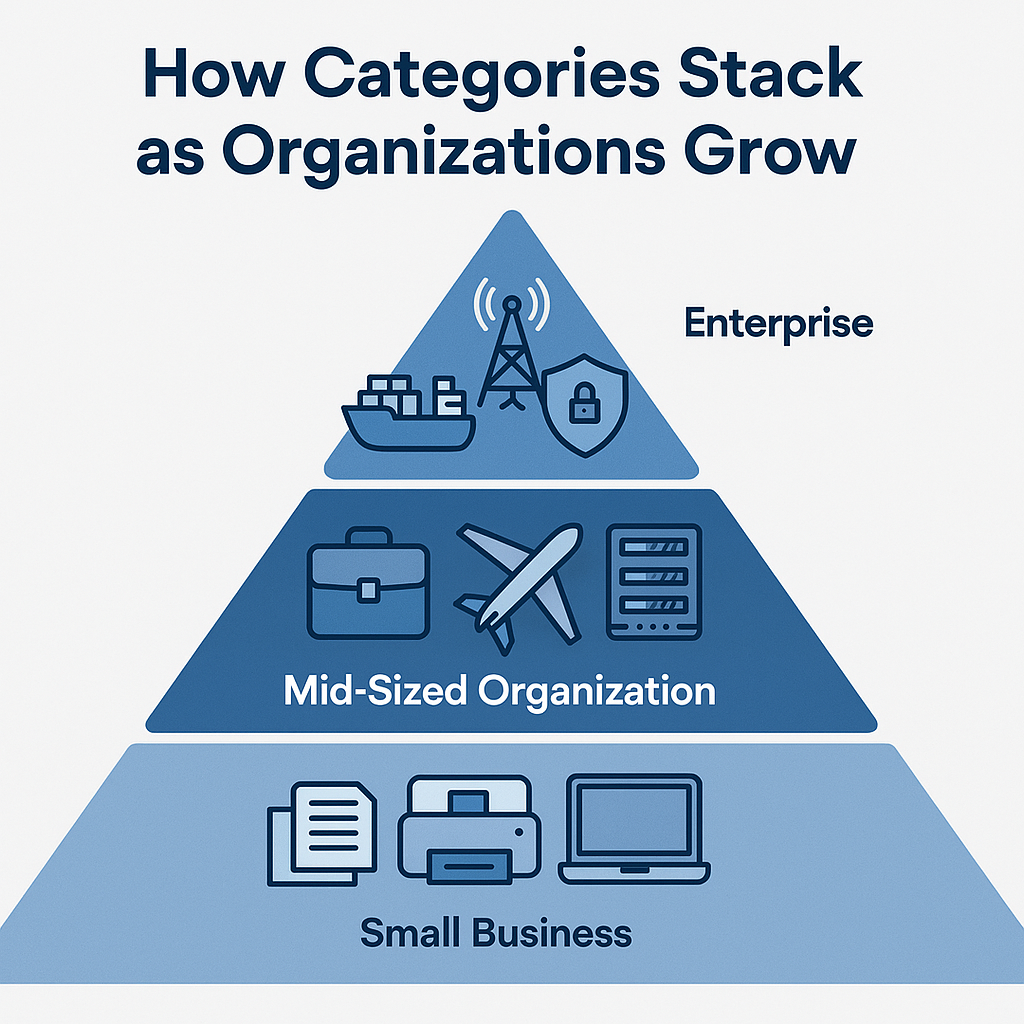
A Small Business starts generally with office supplies! I learned all about this one in my first big city job. It's amazing how much toner and reams of paper people have to stay on top of! Next up they have to manage their IT subscriptions. Every business, no matter the size, gets hit with auto-renewals and subscriptions that start to compound. Local logistics and simple maintenance, repair, and operational expenses are their final focus area. I find that most small businesses don't set up procurement or sourcing categories over their direct requirements for their revenue. This is generally very precious to the business owner or the leader over the function, so they like to maintain control rather than hand it over to someone so indirect spend categories take precedence here starting with an office manager or the poor person in charge of their financial state. These folks are the ones who push for procurement or sourcing leads over the categories as soon as they can get the business justification for the budget.
Mid-sized organizations add in additional layers, generally around professional services like consulting or marketing, travel and fleet management, facilities management and they start to need specialization in broader IT infrastructure. It's at this point in a business's growth that procurement and sourcing management starts to move out of the responsibilities of the office managers and function leaders and form as its own team because the spend is justifying its own focus and budget.
Now the Enterprise segment is a mammoth. These organizations are very large and their spend is scary, so sourcing starts to take on its own department and leadership positions. Categories for Global Logistics and Transportation take shape, utilities and telecom start being something you have more options over, Advanced IT Hardware and Software Categories are created for each domain (think End User Compute, Infrastructure, Cybersecurity..etc) and complex professional services and outsourcing to keep the Big 4 in check.
With each, as the spend grows, so does the responsibility and the payoff for focusing on it. I’ve watched an Enterprise organization take category management seriously and take out 350M in spend in their first year of organizing it. It all starts with a system; you cannot do this in a spreadsheet! It does not matter if you are small, medium, or even the largest Enterprise, if you have not settled on your system yet, check out SourceSight.io today!