Proactive vs. Reactive: Moving Beyond the Price Increase Letter
The most successful procurement teams do not just react well to price increase letters; they build systems that make those letters irrelevant. Managing indirect categories requires a shift from spot-buying to long-term category strategy.
1. Build "Should-Cost" Models
Do you know what it should cost to maintain your HVAC system or license your CRM? By building internal cost models based on market averages, you can spot an unfair price increase long before the supplier sends the notification.
2. Contractual Safeguards
Stop signing standard vendor contracts. Ensure every indirect agreement includes:
- Price Caps: These limit annual increases to a maximum percentage (the lesser of CPI or 3%, for example).
- Notice Periods: Require at least 90 days' notice for any price change, giving you time to find an alternative.
- Right to Terminate: This provides the ability to walk away if an increase exceeds a certain threshold.
3. Consolidate the Tail
Indirect spend is often littered with dozens to thousands of small vendors. By consolidating small spend vendors with your larger vendors that offer similar features, you increase your spend with your preferred suppliers, making you a preferred customer and giving you the leverage to demand multi-year price freezes.
From Firefighting to Strategy
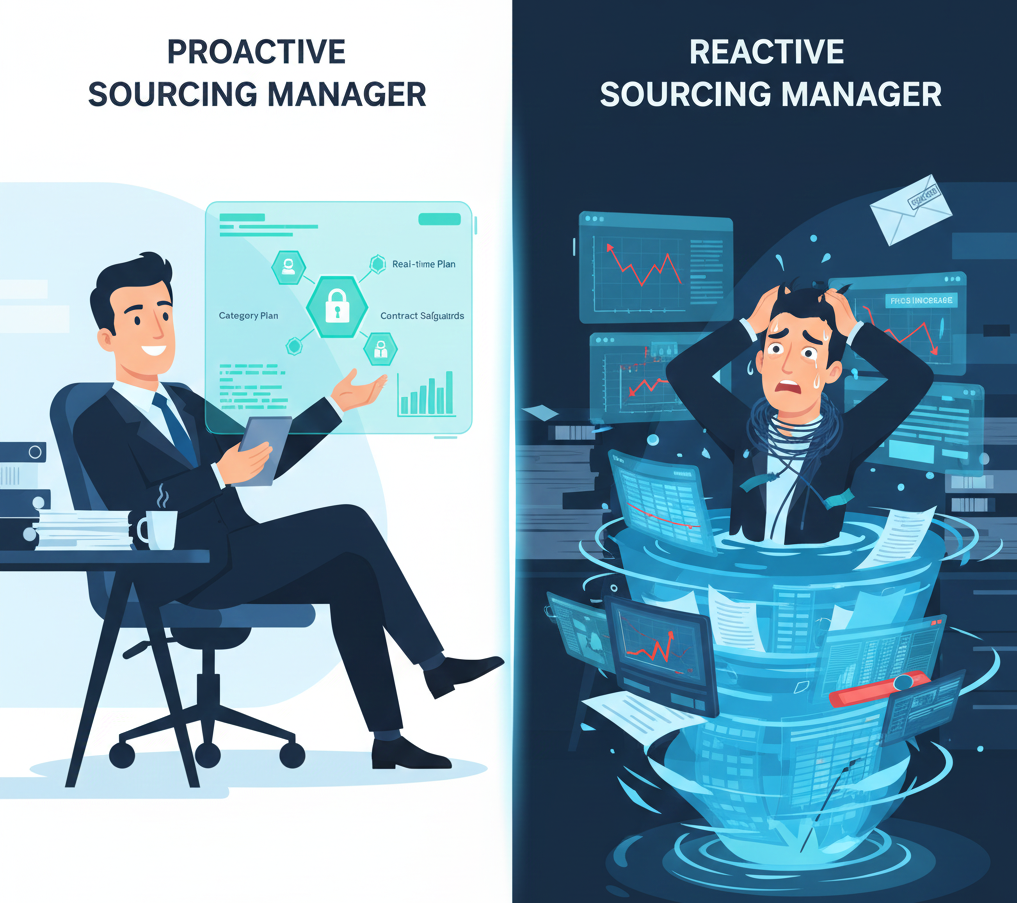
Reactive procurement is exhausted by price increases. Proactive procurement uses tools and data to anticipate them. By moving your indirect categories into a managed framework, you transform procurement from a back-office function into a strategic value-driver.
The SourceSight Advantage: Gain visibility instantly and visualize your entire spend landscape, identifying consolidation opportunities and flagging risky contracts before they impact your bottom line.