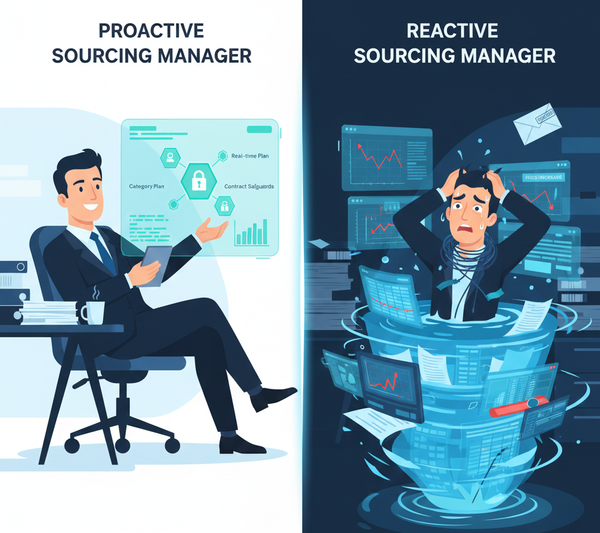
Translating Needs into Sourcing Objectives
(Turning Ideas into Action)
Stakeholders love to share what they want. Sometimes it’s practical, sometimes it’s a wish list that belongs in a fairy tale. Your job? Turn those ideas into sourcing objectives that are measurable, realistic, and actually achievable. Because “make it perfect and cheap” is not an objective, it’s a fantasy.
Why This Matters
Procurement strategy lives or dies on clear objectives. Without them, you’re wandering through a maze blindfolded (and yes, someone will still blame you for getting lost). Objectives give you direction, benchmarks, and a way to say “we did it” with an actual audit trail that shows everything you did to make it real.
Defining the Essentials
Start with the basics:
- Technical Specifications (what exactly are we buying and does it work with existing systems)
- Cost Targets (because Finance will not accept “it felt reasonable” as a justification)
- Company Metrics (because your organizations goals for sustainability or diversity are only achieved through you and through you paying attention to what they care about)
- Timelines (because “ASAP” is not a timeline, and good work takes time, quick work takes a reset of expectations)
Write these down, validate them with stakeholders, and make sure they’re realistic. If someone insists on cutting costs by 50 percent while doubling quality, smile politely and ask for their magic wand. Or be nicer if you don’t want to get in trouble for tone but the sentiment remains.
Using KPIs and Risk Mitigation
Objectives without metrics are just nice words. Define KPIs that matter:
- Cost savings percentage
- On-time delivery rate
- Company Metric score
- Quality defect rate
Then layer in risk mitigation. What happens if the supplier fails? What if raw material prices spike? Build contingency plans now (because explaining why you didn’t later is not fun or way worse if you say it didn’t occur to you).
Prioritizing Competing Objectives
Here’s the truth: not all objectives can win. Sometimes cost beats speed, sometimes sustainability trumps convenience. Rank them based on business impact and stakeholder consensus. If everyone says everything is “top priority,” remind them that priorities are like VIP passes (they lose meaning if everyone gets one).
Mini Case Study: When Objectives Shape Strategy
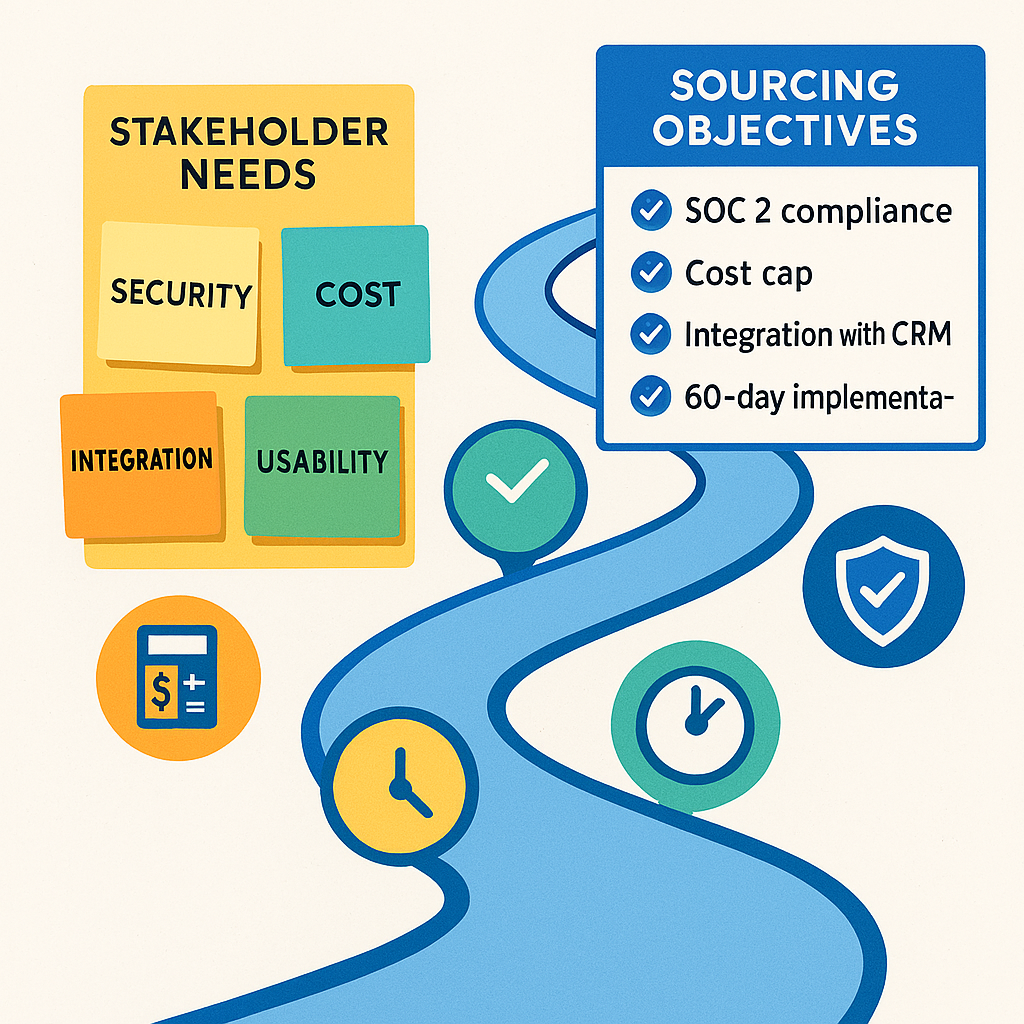
A fast-growing company needed a new SaaS platform for project management. Marketing wanted sleek dashboards that impress clients, IT demanded robust security and easy integration, Finance insisted on predictable subscription costs, and Operations begged for user-friendly workflows. The sourcing team turned this chaos into clear objectives: SOC 2 compliance, integration with existing CRM, cost capped at $50 per user per month, and implementation within 60 days. These objectives guided vendor shortlisting, contract negotiations, and even feature prioritization. The result? A solution that met security standards, stayed on budget, and didn’t require a PhD to use. Magic? No. Just measurable objectives.
Final Thought
Turning needs into sourcing objectives is where procurement moves from theory to action. It’s not glamorous, but it’s the difference between success and a post-mortem meeting where everyone wonders what went wrong. So define, measure, prioritize, and for the love of sanity, write it all down.