What are Sourcing Categories?
A friend of mine survived a layoff. Their gift? Keeping their job and yay more categories to manage in the same amount of time! So, this week, I’ll be breaking down what Sourcing Categories are in a four-part series.
Part 1: What are Sourcing Categories?
In procurement, categorization is all about organizing spend into similar goods and services we call “sourcing categories”. Organizations go about it this way because you can segment the business spend into chunks, gaining visibility, control, and the most important thing, LEVERAGE in negotiation.
How do they make a category?
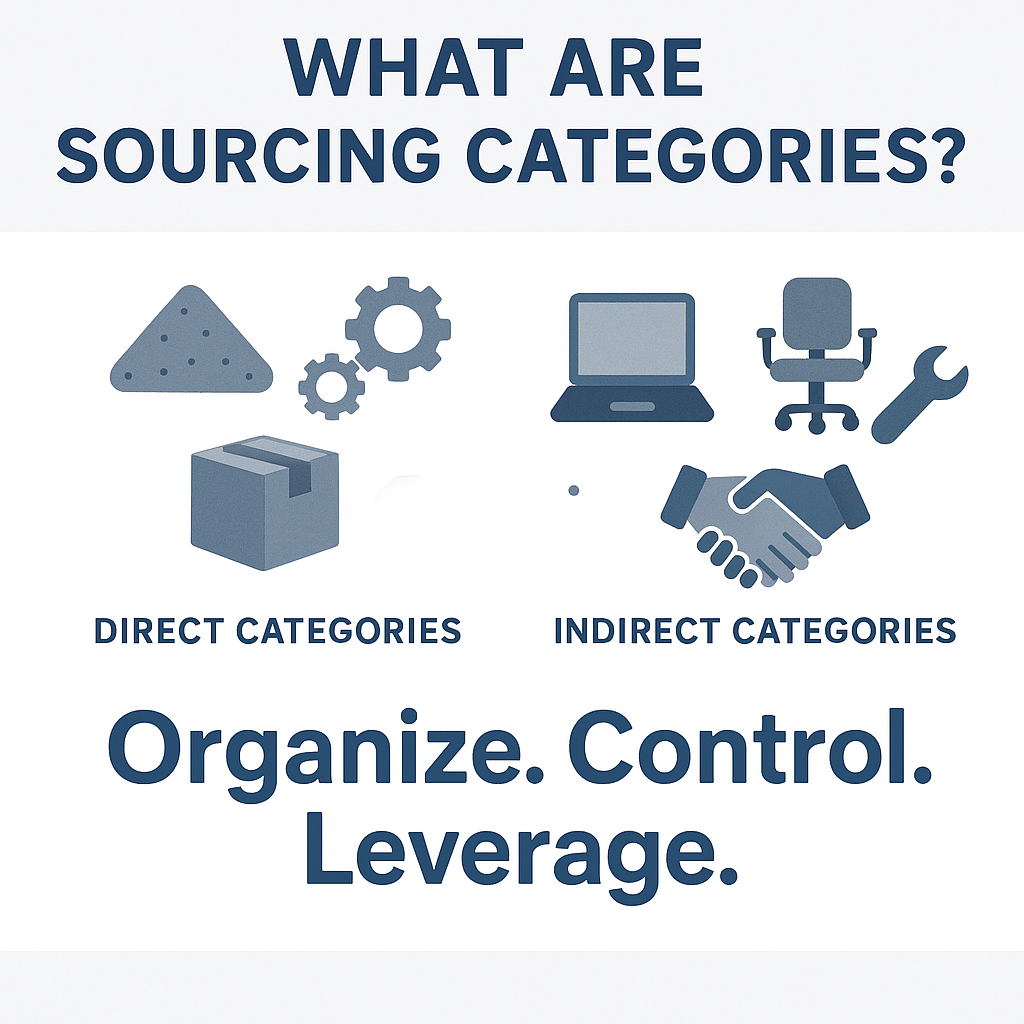
Sourcing categories are logical groupings of products or services that share similar supplier markets, cost drivers, and usage patterns. They help procurement teams manage spend strategically rather than reactively. There are two different types, Direct and Indirect categories
Direct Categories are items that directly contribute to your product or services which can include raw materials (metals, plastics, chemicals, fabric), components and parts, and packaging materials. Essentially the ones you can’t live without to generate revenue...
Indirect categories are all about supporting operations but don’t go into your revenue producing products. This includes IT hardware and software, office supplies, facilities management and professional services.
Generally, procurement and sourcing folks are assigned by category because this helps the organization align resources in an easy way while focusing on improving cost control, supplier relationships and reducing their risk and exposure in contract management.
Categories need to be seen at mass by leaders, so they understand the value they are getting from their procurement leaders. Procurement leaders over these categories need to be able to easily see every vendor, contract, and commitment in one place to best manage it. Its best represented in a system. If you still don’t have a system, visit SourceSight.io and get yourself organized!